
Introduction
Sensitive skin can make choosing skincare and personal colors feel stressful 😟. While products like NIVEA and Aveeno focus on hydration and skin barrier support, a Color Analysis Quiz can help you understand your skin’s visible tone and undertone. This makes it easier to discover clothing, makeup, and accessory shades that complement your natural complexion without overwhelming your overall appearance. 🌿
People with redness, itching, dryness, or flaky skin often need fragrance-free moisturizers and soothing ingredients 🌸. While NIVEA provides rich moisture-locking hydration, Aveeno focuses on calming sensitive skin with colloidal oatmeal and lightweight formulas. This detailed skincare comparison includes dermatologist insights, salon client reviews, and expert skincare advice to help sensitive skin users choose the best moisturizer confidently. ✨
Why Sensitive Skin Reacts Differently to Moisturizers
Sensitive skin reacts faster because the skin barrier becomes weak and loses moisture easily 🌿. Harsh fragrance, alcohol, and heavy skincare ingredients can trigger redness, itching, and burning. Dermatologists often recommend fragrance-free moisturizers and gentle skincare products for reactive skin support.
This article was reviewed by a dermatologist and beauty saloon owner 💆♀️✨ who regularly helps clients manage eczema-prone skin and irritation. Many salon clients reported that simple moisturizers with calming hydration improved redness and dryness within days of consistent use.
- Sensitive skin needs gentle hydration 🌸
- Skin barrier damage increases irritation
- Harsh fragrance can trigger redness
- Lightweight creams feel calmer on skin
- Over-exfoliation weakens the skin barrier
- Reactive skin benefits from soothing ingredients
- Patch testing reduces allergy risks 🧴
- Hydration helps reduce flaky skin
- Dermatologist-tested skincare is safer
- Simple skincare routines work best ✨
NIVEA vs Aveeno: Which Is Gentler for Sensitive Skin?
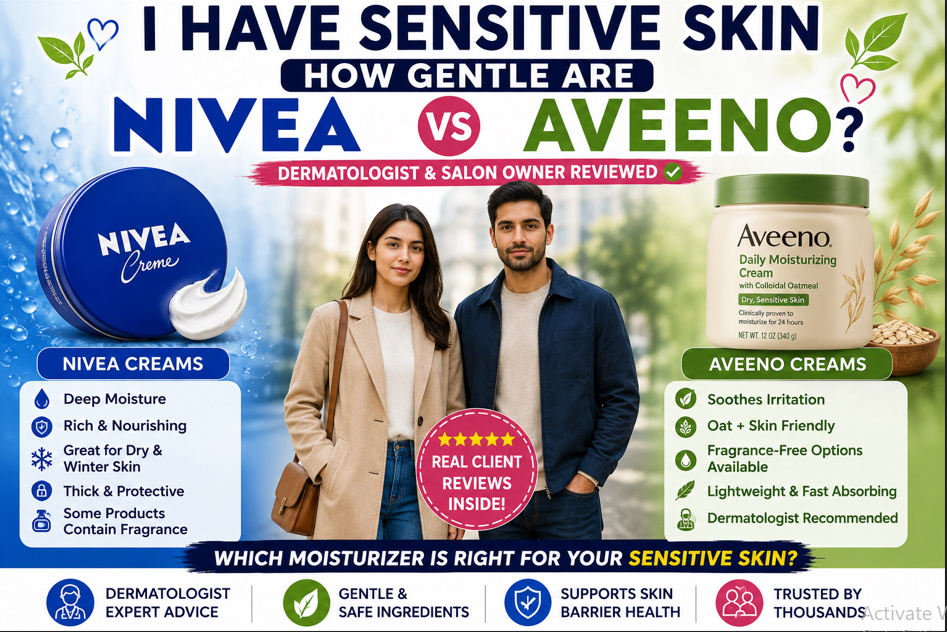
When comparing NIVEA vs Aveeno for sensitive skin, both moisturizers offer hydration but use different formulas 🌼. Aveeno focuses on calming irritated skin with oat-based ingredients, while NIVEA creams provide deeper moisture using rich occlusive ingredients for dry skin protection.
A dermatologist and beauty saloon owner explained that clients with eczema-prone skin usually preferred Aveeno because it felt lighter and less irritating 💖. However, people with rough winter dryness often loved NIVEA creams because they locked moisture into flaky skin overnight.
- Aveeno suits reactive skin better 🌿
- NIVEA works well for deep hydration
- Sensitive skin reacts differently to creams
- Oat-based skincare calms irritation
- Thick creams protect dry skin
- Fragrance-free lotions reduce irritation
- Lightweight moisturizers feel less greasy
- Skin barrier repair improves comfort
- Rich creams help winter dryness ❄️
- Dermatologists often recommend patch testing
What Makes Aveeno Popular Among Sensitive Skin Users?
Aveeno became popular because many products contain Colloidal Oatmeal, known for calming inflammation and supporting the skin barrier 🌾. Sensitive skin users often prefer Aveeno because its formulas are lightweight, soothing, and commonly available in fragrance-free versions.
A dermatologist and beauty saloon owner shared that many clients with itchy skin and redness noticed visible comfort after switching to Aveeno moisturizers 💧. Several customer reviews praised Aveeno Calm + Restore for reducing irritation without leaving greasy residue behind.
- Colloidal oatmeal reduces redness 🌾
- Aveeno supports skin barrier health
- Fragrance-free formulas feel safer
- Lightweight lotions absorb quickly
- Reactive skin prefers calming ingredients
- Eczema-prone skin benefits from oat creams
- Gentle moisturizers reduce itching
- Dermatologist-approved skincare builds trust
- Aveeno feels less heavy on skin
- Clients report smoother skin texture ✨
Can NIVEA Creams Trigger Irritation or Redness?
Some NIVEA creams contain fragrance and rich emollients that may irritate highly reactive skin 😟. However, people with dry sensitive skin often enjoy the deep moisture barrier created by ingredients like glycerin, mineral oil, and protective moisturizing compounds.
According to a dermatologist and beauty saloon owner 💆, clients with fragrance sensitivity sometimes experienced mild redness after using heavily scented creams. Still, many users with winter dryness praised NIVEA for healing rough patches and overnight dehydration effectively.
- Fragrance may irritate reactive skin ⚠️
- Rich creams help cracked skin
- NIVEA provides strong moisture retention
- Thick moisturizers protect dry patches
- Sensitive skin may react differently
- Heavy textures can feel greasy
- Patch testing prevents unexpected irritation
- Overnight creams improve skin softness 🌙
- Dry skin loves occlusive ingredients
- Clients report smoother winter skin ❄️
The Role of Colloidal Oatmeal in Calming Sensitive Skin
Colloidal oatmeal is one of the most trusted skincare ingredients for eczema-prone and irritation-prone skin 🌾. It helps soothe itching, reduce inflammation, and strengthen the skin barrier naturally while locking in moisture without clogging pores or causing excessive greasiness.
A dermatologist and beauty saloon owner noted that many salon clients with redness and dryness experienced calmer skin after adding oat-based moisturizers 💖. Customer reviews frequently mention that colloidal oatmeal creams leave skin softer, healthier, and more comfortable throughout the day.
- Oatmeal calms itchy skin 🌿
- Sensitive skin loves soothing ingredients
- Colloidal oatmeal reduces inflammation
- Skin barrier repair improves hydration
- Eczema-prone skin benefits greatly
- Oat creams feel lightweight
- Redness decreases with gentle skincare
- Dermatologists trust oatmeal moisturizers
- Moisture retention prevents flaky skin
- Clients notice softer skin quickly ✨
Fragrance-Free Moisturizers: Why They Matter for Reactive Skin
Fragrance-free moisturizers are often safer for reactive skin because artificial scents can trigger burning, redness, and irritation 🌸. Dermatologists recommend avoiding strong fragrance if your skin barrier is already damaged or if you experience itching frequently.
A dermatologist and beauty saloon owner explained that clients using fragrance-free skincare products often noticed fewer breakouts and less redness 💆♀️. Many customer reviews highlighted that gentle moisturizers without perfume helped maintain hydration while keeping sensitive skin calm and balanced.
- Fragrance-free creams reduce irritation 🌼
- Reactive skin dislikes strong perfume
- Gentle skincare supports barrier repair
- Lightweight moisturizers feel calming
- Sensitive skin benefits from simplicity
- Harsh ingredients trigger redness
- Dermatologist-tested lotions feel safer
- Hydration improves skin comfort 💧
- Patch testing remains important
- Clients prefer non-irritating skincare ✨
Heavy Cream vs Lightweight Lotion: Which Feels Better on Sensitive Skin?
People with sensitive skin often struggle to choose between heavy creams and lightweight lotions 🤔. Thick creams provide stronger moisture protection, while lightweight moisturizers absorb faster and usually feel calmer on reactive skin without leaving greasy residue behind.
A dermatologist and beauty saloon owner explained that many clients with oily-sensitive skin preferred lightweight lotions 🌿. However, customers with winter dryness and flaky patches often loved rich creams because they delivered deep hydration and long-lasting skin barrier support overnight.
- Lightweight lotions feel breathable 🌸
- Heavy creams protect dry skin
- Sensitive skin dislikes greasy textures
- Reactive skin prefers gentle hydration
- Thick moisturizers seal moisture effectively
- Oily skin benefits from lighter formulas
- Winter dryness needs richer creams ❄️
- Skin comfort depends on texture
- Patch testing helps avoid irritation
- Clients enjoy calming moisturizers ✨
Best Moisturizer Ingredients for Eczema-Prone Skin
Eczema-prone skin needs soothing ingredients that reduce irritation and repair the damaged skin barrier 🌾. Dermatologists often recommend moisturizers with colloidal oatmeal, glycerin, ceramides, and panthenol because they provide calming hydration without triggering redness or burning sensations.
A dermatologist and beauty saloon owner shared that salon clients with eczema-prone skin experienced fewer flare-ups after using fragrance-free moisturizers 💖. Customer reviews frequently praised oat-based creams for reducing itching, flaky patches, and uncomfortable dryness during colder weather conditions.
- Ceramides strengthen the skin barrier 🌿
- Colloidal oatmeal calms inflammation
- Glycerin attracts skin moisture
- Panthenol reduces dryness and irritation
- Fragrance-free skincare feels gentler
- Eczema-prone skin needs soothing hydration
- Sensitive skin benefits from simple ingredients
- Heavy fragrance may trigger redness ⚠️
- Dermatologist-approved creams feel safer
- Clients report softer skin quickly ✨
How Skin Barrier Damage Increases Sensitivity and Irritation
The skin barrier protects against moisture loss, pollution, and irritants 🌸. When this protective layer becomes damaged, sensitive skin reacts faster to harsh ingredients, fragrance, environmental changes, and over-exfoliation, causing redness, itching, dryness, and burning sensations.
A dermatologist and beauty saloon owner explained that many clients unknowingly damage their skin barrier using strong skincare acids 💆♀️. Customer reviews often mention that switching to gentle moisturizers and fragrance-free products helped restore skin comfort and reduce irritation naturally.
- Damaged skin loses moisture quickly 💧
- Fragrance irritates weak skin barriers
- Over-cleansing increases sensitivity
- Gentle skincare protects reactive skin
- Harsh exfoliants worsen redness
- Barrier repair improves hydration
- Lightweight moisturizers feel soothing 🌿
- Sensitive skin needs calming ingredients
- Dermatologists recommend simple routines
- Clients notice reduced irritation fast ✨
Are NIVEA Creams Too Heavy for Oily Sensitive Skin?
Some people with oily-sensitive skin feel that NIVEA creams are too rich and greasy 😅. Thick moisturizers can sit heavily on oily skin, especially in humid weather, while lighter lotions may absorb faster and feel more comfortable throughout the day.
A dermatologist and beauty saloon owner shared that several salon clients with oily-sensitive skin preferred lighter Aveeno lotions 🌼. However, users with combination skin still enjoyed NIVEA creams during winter because they helped reduce flaky patches and dehydration overnight effectively.
- Oily skin prefers lightweight hydration 🌿
- Thick creams may feel greasy
- NIVEA works better for dry skin
- Sensitive skin reacts differently to textures
- Lightweight lotions absorb faster
- Heavy creams protect flaky patches ❄️
- Reactive skin needs calming formulas
- Fragrance sensitivity increases irritation risks
- Dermatologists suggest patch testing
- Clients enjoy balanced hydration ✨
Why Dermatologists Often Recommend Aveeno for Sensitive Skin
Dermatologists frequently recommend Aveeno because many products are fragrance-free and contain soothing oat-based ingredients 🌾. These moisturizers help calm irritation, reduce redness, and strengthen the skin barrier without causing excessive heaviness or pore-clogging discomfort on sensitive skin.
A dermatologist and beauty saloon owner explained that clients with eczema-prone skin often reported better comfort using Aveeno moisturizers 💖. Customer reviews regularly mention softer skin, reduced itching, and healthier hydration after switching to gentle skincare routines with oat-based products.
- Aveeno supports barrier repair 🌿
- Oat ingredients calm reactive skin
- Lightweight moisturizers feel soothing
- Fragrance-free skincare reduces irritation
- Sensitive skin prefers gentle formulas
- Dermatologists trust oat-based skincare
- Eczema-prone skin benefits greatly
- Hydration improves skin comfort 💧
- Clients report reduced redness quickly
- Gentle skincare prevents dryness ✨
Understanding the Difference Between Hydration and Moisture Locking
Hydration adds water to the skin, while moisture locking prevents that hydration from escaping 💦. Lightweight lotions usually hydrate the skin quickly, whereas thick creams create a protective barrier that keeps moisture trapped inside for longer-lasting softness and comfort.
A dermatologist and beauty saloon owner explained that clients with dry sensitive skin often need both hydration and moisture sealing 🌸. Customer reviews revealed that combining lightweight hydrating products with rich nighttime creams improved flaky skin and overall skin barrier health.
- Hydration increases skin softness 💧
- Moisture locking prevents dryness
- Lightweight lotions absorb quickly
- Thick creams protect overnight 🌙
- Sensitive skin needs balanced hydration
- Dry skin loves moisture barriers
- Reactive skin prefers gentle products
- Skin barrier repair reduces irritation
- Dermatologists recommend layered hydration
- Clients enjoy smoother skin texture ✨
Can Fragrance in Skincare Cause Burning or Itching?
Fragrance is one of the most common skincare triggers for sensitive and reactive skin 🌸. Artificial scents can weaken the skin barrier and cause redness, burning, itching, or dryness, especially for people with eczema-prone skin or fragrance sensitivity issues.
A dermatologist and beauty saloon owner explained that many salon clients experienced irritation after using heavily scented moisturizers 💆♀️. Customer reviews often revealed that switching to fragrance-free skincare products helped calm redness and improve overall skin comfort within a short time.
- Fragrance may trigger skin irritation ⚠️
- Sensitive skin reacts quickly to perfume
- Burning sensations indicate barrier stress
- Fragrance-free creams feel gentler 🌿
- Reactive skin prefers simple formulas
- Itching increases with harsh ingredients
- Lightweight moisturizers reduce discomfort
- Dermatologists recommend avoiding strong scents
- Patch testing helps prevent reactions
- Clients report calmer skin after switching ✨
Which Moisturizer Causes Less Irritation: NIVEA or Aveeno?
When comparing irritation risk, Aveeno is usually considered gentler because many products contain Colloidal Oatmeal and fragrance-free formulas 🌾. NIVEA creams provide stronger moisture protection but may feel heavier or more irritating for highly reactive skin users.
A dermatologist and beauty saloon owner shared that clients with eczema-prone skin often preferred Aveeno 💖. However, users struggling mainly with winter dryness and flaky skin praised NIVEA for delivering rich overnight hydration and long-lasting moisture barrier support.
- Aveeno feels lighter on skin 🌿
- NIVEA offers deeper hydration
- Sensitive skin dislikes strong fragrance
- Oat ingredients calm irritation
- Thick creams suit dry skin better
- Reactive skin prefers soothing lotions
- Fragrance-free skincare lowers irritation risk
- Patch testing improves skincare safety
- Dermatologists often recommend Aveeno
- Clients love softer skin texture ✨
Best Drugstore Creams for Dry and Sensitive Skin
Drugstore moisturizers can work wonderfully for sensitive skin when they contain calming and barrier-supporting ingredients 🌸. Popular creams from Aveeno and NIVEA help reduce dryness, protect the skin barrier, and improve hydration without needing expensive luxury skincare products.
A dermatologist and beauty saloon owner explained that salon clients often preferred affordable fragrance-free moisturizers 💆♀️. Customer reviews showed that many people achieved smoother, healthier skin using gentle drugstore creams consistently alongside simple skincare routines and proper hydration habits.
- Drugstore skincare can be effective 💧
- Gentle moisturizers support skin health
- Sensitive skin needs calming ingredients
- Fragrance-free creams feel safer 🌿
- Thick creams help flaky skin
- Lightweight lotions suit oily skin
- Oat-based moisturizers reduce itching
- Rich hydration improves rough patches
- Dermatologists recommend barrier repair
- Clients enjoy affordable skincare options ✨
How to Choose a Safe Moisturizer for Reactive Skin
Choosing a safe moisturizer starts with checking ingredient labels carefully 🌼. Sensitive skin users should avoid harsh fragrance, alcohol-heavy formulas, and irritating exfoliants while focusing on gentle hydration, skin barrier repair, and dermatologist-tested skincare products for long-term comfort.
A dermatologist and beauty saloon owner noted that many clients improved irritation simply by simplifying their routines 💖. Customer reviews often mention that lightweight, fragrance-free moisturizers reduced burning sensations and helped maintain healthier, calmer skin throughout seasonal weather changes.
- Read skincare labels carefully 📖
- Avoid strong fragrance and alcohol
- Gentle hydration supports skin balance
- Lightweight lotions feel calming 🌿
- Reactive skin dislikes harsh ingredients
- Patch testing prevents irritation risks
- Simple skincare routines work best
- Barrier repair improves skin comfort
- Dermatologist-tested products feel safer
- Clients notice fewer breakouts ✨
Is Petrolatum Good or Bad for Sensitive Skin?
Petrolatum is widely used in moisturizers because it creates a protective barrier that locks in hydration 💧. For dry sensitive skin, it can reduce moisture loss and improve rough patches, though some oily skin users may find heavy formulas uncomfortable.
A dermatologist and beauty saloon owner explained that many clients with cracked or flaky skin benefited from petrolatum-based creams 🌙. Customer reviews frequently mention softer skin and better overnight hydration, especially during cold weather and severe dryness conditions.
- Petrolatum prevents moisture loss 💦
- Dry skin benefits from occlusive protection
- Sensitive skin needs barrier support
- Heavy creams may feel greasy
- Winter dryness improves with rich creams ❄️
- Lightweight lotions suit oily skin better
- Petrolatum helps flaky patches heal
- Dermatologists trust moisture-locking ingredients
- Patch testing is still important
- Clients enjoy smoother overnight skin ✨
Why Patch Testing Matters Before Trying New Skincare Products
Patch testing helps sensitive skin users avoid painful reactions before applying products fully 🌸. Testing a moisturizer on a small skin area for 24–48 hours can reveal redness, itching, burning, or irritation caused by fragrance or harsh ingredients.
A dermatologist and beauty saloon owner shared that many clients avoided severe irritation by patch testing first 💆♀️. Customer reviews also highlighted that this simple habit improved skincare safety and helped users discover which gentle moisturizers suited their skin barrier best.
- Patch testing prevents irritation ⚠️
- Sensitive skin reacts unpredictably
- Small tests reduce allergy risks
- Fragrance can trigger burning sensations
- Gentle skincare supports barrier health 🌿
- Reactive skin needs extra caution
- Lightweight moisturizers feel safer
- Dermatologists recommend testing products first
- Healthy skin barriers reduce sensitivity
- Clients feel more confident using skincare ✨
The Truth About Thick Moisturizers for Winter Dryness
Winter weather can weaken the skin barrier and increase dryness, flaking, and irritation ❄️. Thick moisturizers help by creating a protective layer that locks moisture into sensitive skin and prevents dehydration caused by cold air and indoor heating.
A dermatologist and beauty saloon owner explained that many salon clients experienced smoother skin after using rich creams during winter 🌙. Customer reviews often mention reduced tightness, softer texture, and healthier hydration when thick moisturizers are applied consistently before bedtime.
- Winter air causes severe dryness ❄️
- Thick creams lock in hydration
- Sensitive skin needs moisture protection
- Rich moisturizers reduce flaky patches
- Skin barrier weakens in cold weather
- Overnight creams improve softness 🌙
- Fragrance-free products feel gentler
- Reactive skin dislikes harsh winter conditions
- Dermatologists recommend barrier repair
- Clients notice smoother skin quickly ✨
Can Eczema Sufferers Use NIVEA Cream Safely?
Some eczema sufferers can safely use NIVEA creams, especially when dryness is the main concern 🌿. However, certain fragranced formulas may irritate highly reactive skin, making fragrance-free moisturizers and patch testing important before regular use on sensitive areas.
A dermatologist and beauty saloon owner shared that clients with mild eczema sometimes enjoyed NIVEA’s rich hydration 💖. Customer reviews revealed that people with severe irritation usually preferred lighter oat-based creams like Aveeno for calming redness and itching symptoms.
- Eczema skin needs gentle hydration 🌾
- NIVEA helps severe dryness
- Fragrance may trigger irritation ⚠️
- Patch testing improves skincare safety
- Thick creams protect rough patches
- Reactive skin prefers soothing ingredients
- Oat-based moisturizers calm redness
- Sensitive skin reacts differently to formulas
- Dermatologists suggest fragrance-free skincare
- Clients enjoy softer winter skin ✨
Lightweight vs Rich Creams: Which One Protects the Skin Barrier Better?
Lightweight lotions hydrate quickly, while rich creams create a stronger moisture barrier 💧. Sensitive skin users often need both because hydration prevents dryness, and thicker creams help lock moisture inside the skin for longer-lasting protection and comfort.
A dermatologist and beauty saloon owner explained that clients with oily-sensitive skin preferred lightweight lotions 🌸. However, users with cracked or flaky skin reported better overnight repair using rich creams that protected the skin barrier during colder seasons.
- Lightweight lotions absorb faster 🌿
- Rich creams prevent moisture loss
- Sensitive skin needs balanced hydration
- Thick creams help flaky skin
- Oily skin dislikes greasy textures
- Skin barrier repair improves comfort
- Winter dryness needs stronger protection ❄️
- Reactive skin prefers calming ingredients
- Dermatologists recommend layered hydration
- Clients report smoother skin texture ✨
Common Sensitive Skin Triggers Hidden in Moisturizers
Many moisturizers contain hidden irritants that can trigger redness, itching, or burning 😟. Sensitive skin users should watch for strong fragrance, alcohol-heavy ingredients, essential oils, and harsh preservatives that weaken the skin barrier and increase irritation risks.
A dermatologist and beauty saloon owner explained that clients often improved their skin simply by avoiding irritating ingredients 🌼. Customer reviews regularly mention fewer breakouts and calmer skin after switching to fragrance-free and dermatologist-tested moisturizers designed for reactive skin support.
- Fragrance commonly irritates skin ⚠️
- Alcohol-heavy products increase dryness
- Essential oils may trigger reactions
- Sensitive skin dislikes harsh preservatives
- Fragrance-free creams feel safer 🌿
- Gentle hydration supports barrier repair
- Reactive skin prefers simple ingredients
- Patch testing helps avoid flare-ups
- Dermatologists recommend ingredient awareness
- Clients notice reduced redness quickly ✨
Best Daily Skincare Routine for Redness and Irritation-Prone Skin
A gentle skincare routine helps reduce redness and protect the skin barrier 🌸. Dermatologists recommend using a mild cleanser, fragrance-free moisturizer, and sunscreen daily while avoiding harsh scrubs, over-exfoliation, and strong active ingredients on sensitive skin.
A dermatologist and beauty saloon owner shared that clients with irritation-prone skin saw healthier results using simple skincare routines 💆♀️. Customer reviews often highlight smoother texture, reduced dryness, and calmer skin after focusing on hydration and barrier repair consistently.
- Gentle cleansers protect sensitive skin 🌿
- Fragrance-free moisturizers reduce irritation
- Sunscreen prevents barrier damage ☀️
- Over-exfoliation increases redness
- Hydration improves skin comfort 💧
- Simple skincare routines work best
- Reactive skin dislikes harsh acids
- Lightweight creams feel calming
- Dermatologists support barrier-focused skincare
- Clients report healthier glowing skin ✨
How Aveeno Supports Long-Term Skin Barrier Health
Aveeno products are known for supporting long-term skin barrier health using soothing oat-based ingredients 🌾. These moisturizers help reduce irritation, improve hydration, and strengthen the protective barrier that keeps sensitive skin calm and comfortable daily.
A dermatologist and beauty saloon owner explained that many clients experienced fewer flare-ups after switching to Aveeno 💖. Customer reviews frequently mention softer skin, reduced itching, and improved hydration after consistently using fragrance-free oat-based moisturizers for sensitive skin care.
- Oat ingredients calm reactive skin 🌿
- Aveeno supports barrier repair
- Sensitive skin loves lightweight hydration
- Fragrance-free products reduce irritation
- Eczema-prone skin benefits from oats
- Gentle moisturizers improve comfort 💧
- Dermatologists trust soothing skincare
- Long-term hydration prevents dryness
- Reactive skin prefers calming formulas
- Clients report healthier skin texture ✨
Final Verdict: Should Sensitive Skin Users Choose NIVEA or Aveeno?
Choosing between NIVEA and Aveeno depends on your skin needs 🌸. Aveeno is usually gentler for eczema-prone and highly reactive skin because of its oat-based, fragrance-free formulas, while NIVEA works better for deep hydration and winter dryness relief.
A dermatologist and beauty saloon owner explained that salon clients with redness and itching often preferred Aveeno 💖. However, users with cracked dry skin loved NIVEA’s rich creams for overnight moisture protection and stronger hydration during colder weather conditions.
- Aveeno suits reactive skin better 🌿
- NIVEA helps severe dryness
- Oat ingredients calm irritation 🌾
- Thick creams protect flaky skin
- Fragrance-free products reduce redness
- Lightweight lotions feel soothing
- Sensitive skin reacts differently to ingredients
- Dermatologists recommend patch testing ⚠️
- Hydration supports healthy skin barriers
- Clients enjoy softer healthier skin ✨
25 FAQs About Sensitive Skin, NIVEA, and Aveeno
1. Is Aveeno better for sensitive skin than NIVEA?
Yes 🌿. Aveeno is usually gentler because many formulas are fragrance-free and contain soothing oat ingredients for reactive and eczema-prone skin.
2. Can NIVEA creams irritate sensitive skin?
Sometimes ⚠️. Certain NIVEA creams contain fragrance and rich ingredients that may trigger redness or itching in highly reactive skin users.
3. Why do dermatologists recommend Aveeno?
Dermatologists often recommend Aveeno because its oat-based formulas help calm irritation and strengthen the skin barrier naturally 🌾.
4. What is the best moisturizer for eczema-prone skin?
Fragrance-free moisturizers with colloidal oatmeal, ceramides, and glycerin are often best for eczema-prone sensitive skin 💧.
5. Can fragrance in skincare cause burning?
Yes 😟. Strong fragrance can irritate sensitive skin and trigger redness, itching, or burning sensations when the skin barrier is weak.
6. Is Colloidal Oatmeal good for sensitive skin?
Absolutely 🌾. Colloidal oatmeal helps calm irritation, reduce redness, and improve skin barrier health for reactive skin users.
7. Which moisturizer feels less greasy?
Aveeno lotions usually feel lighter and less greasy compared to thicker NIVEA creams ✨.
8. Are thick creams better for winter dryness?
Yes ❄️. Thick moisturizers help lock moisture into the skin and protect against harsh cold weather dryness.
9. Can oily sensitive skin use heavy creams?
Some oily-sensitive skin users may find rich creams too greasy 🌸. Lightweight moisturizers usually feel more comfortable daily.
10. Why is patch testing important?
Patch testing helps detect irritation before applying skincare products fully ⚠️, reducing the risk of allergic reactions or redness.
11. Is petrolatum safe for sensitive skin?
Petrolatum is generally safe and helps prevent moisture loss, especially for dry sensitive skin 💦.
12. What ingredients should sensitive skin avoid?
Sensitive skin should avoid strong fragrance, harsh alcohols, and irritating preservatives whenever possible 🚫.
13. Can moisturizers repair the skin barrier?
Yes 🌿. Barrier-supporting ingredients like ceramides, glycerin, and oatmeal help restore hydration and improve skin protection.
14. Is NIVEA good for cracked dry skin?
Yes 💧. NIVEA creams provide rich hydration that helps soften rough patches and reduce winter dryness effectively.
15. What causes sensitive skin flare-ups?
Common triggers include fragrance, harsh skincare products, weather changes, over-exfoliation, and damaged skin barriers 😟.
16. Are fragrance-free moisturizers safer?
Usually yes 🌸. Fragrance-free skincare lowers irritation risk and feels gentler for reactive or eczema-prone skin.
17. Can sensitive skin use skincare acids?
Sensitive skin should use acids carefully because overuse can damage the skin barrier and increase redness ⚠️.
18. Why does skin feel tight after washing?
Tightness often means the cleanser removed too much moisture and weakened the skin barrier 💦.
19. How often should sensitive skin moisturize?
Most dermatologists recommend moisturizing twice daily to maintain hydration and reduce irritation 🌿.
20. Is lightweight lotion better for reactive skin?
Yes ✨. Lightweight lotions usually absorb faster and feel calmer on reactive or oily-sensitive skin types.
21. Can eczema sufferers use NIVEA safely?
Some can 🌸. However, fragrance-free products are usually safer for highly reactive or eczema-prone skin users.
22. Why is the skin barrier important?
The skin barrier protects against moisture loss, irritation, pollution, and harmful environmental triggers 🌍.
23. Which brand is best for winter skincare?
NIVEA is often preferred for winter dryness because of its thick moisture-locking formulas ❄️.
24. What skincare routine works best for redness-prone skin?
A simple routine with gentle cleanser, fragrance-free moisturizer, and sunscreen works best ☀️.
25. Should sensitive skin users choose NIVEA or Aveeno?
Choose Aveeno for reactive or eczema-prone skin 🌾, while NIVEA works better for deep hydration and dry winter skin.
Conclusion
Choosing between NIVEA and Aveeno depends on your skin type, sensitivity level, and hydration needs 🌿. Aveeno is usually preferred for reactive or eczema-prone skin because its fragrance-free, oat-based formulas reduce irritation and support the skin barrier gently. NIVEA, however, remains excellent for severe dryness and overnight moisture protection during colder seasons. ❄️
Dermatologists and beauty saloon professionals often recommend patch testing before using new skincare products 💆♀️. Client reviews show that simple skincare routines with gentle moisturizers improve redness, itching, and dryness over time. Whether you prefer lightweight lotions or thick creams, focusing on skin barrier repair, calming hydration, and fragrance-free ingredients will help sensitive skin stay healthier, softer, and more comfortable daily. ✨